
Lycopene: Antioxidants, Tomatoes & Prostate Health
Exploring the science behind one of nature’s most recognizable carotenoids.
Lycopene is a naturally occurring pigment responsible for the red color of tomatoes, watermelon, and several other fruits.
It belongs to the carotenoid family, a group of plant compounds that have attracted considerable scientific interest for their antioxidant properties.
Lycopene is frequently discussed in men’s wellness because researchers have investigated relationships between tomato consumption, circulating lycopene levels, and prostate health.
What Is Lycopene?
Lycopene is a fat-soluble carotenoid.
Unlike beta-carotene, it is not converted into vitamin A by the human body.
Its chemical structure allows it to interact with reactive molecules in laboratory systems, which is one reason it has been studied in antioxidant research.
How Does Lycopene Work?
Researchers have investigated several potential mechanisms.
Antioxidant activity: Lycopene can interact with certain reactive oxygen species in experimental settings.
Cell signaling: Laboratory studies have examined whether lycopene influences pathways involved in inflammation, cellular growth, and communication.
Tissue distribution: Lycopene is present in various human tissues, including the prostate.
These findings help explain scientific interest in lycopene, but they do not establish that taking lycopene supplements prevents or treats prostate disease.
What Does the Research Say About Prostate Health?
Observational studies have explored associations between dietary tomato products, lycopene exposure, and prostate cancer risk.
Some have reported potentially favorable associations, while others have found inconsistent results.
Importantly, observational associations cannot establish cause and effect.
Clinical evidence is insufficient to conclude that lycopene supplements prevent prostate cancer or improve benign prostate enlargement.
Lycopene should therefore be understood as a researched dietary carotenoid rather than a proven prostate treatment.
Is Lycopene Better Absorbed From Cooked Tomatoes?
Food processing can alter the availability of lycopene.
Cooking and processing tomatoes may make lycopene more accessible, while consuming it with dietary fat can improve absorption.
Tomato paste and cooked tomato sauces can therefore be useful dietary sources.
This does not mean that every processed tomato product is nutritionally superior in every respect.
Lycopene in Super Prostate Health
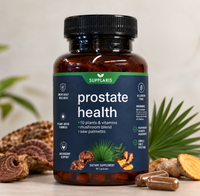
Supplaris Super Prostate Health includes natural lycopene derived from tomatoes within its antioxidant blend.
It is combined with turmeric root extract and green tea leaf extract as part of the formula’s broader botanical profile.
The inclusion of these ingredients reflects their nutritional and research interest, not proven clinical effectiveness of the finished formula for urinary symptoms or prostate disease.
Frequently Asked Questions
Does lycopene prevent prostate cancer?
There is insufficient clinical evidence to establish that lycopene supplementation prevents prostate cancer.
Can I obtain lycopene through food?
Yes. Tomatoes, tomato paste, watermelon, and certain other fruits provide dietary lycopene.
Is lycopene an essential nutrient?
No. Lycopene is a dietary carotenoid, but there is no established recommended dietary allowance for it.
Explore Super Prostate Health
Learn more about the combination of botanical extracts, lycopene, and essential nutrients in Supplaris Super Prostate Health.
Scientific References
- National Cancer Institute. Prostate Cancer, Nutrition, and Dietary Supplements (PDQ®) — Health Professional Version. https://www.cancer.gov/about-
cancer/treatment/cam/hp/ prostate-supplements-pdq - NIH Office of Dietary Supplements. Dietary Supplements for Health and Exercise and related nutrition resources. https://ods.od.nih.gov/
- Story EN, Kopec RE, Schwartz SJ, Harris GK. An Update on the Health Effects of Tomato Lycopene. Annual Review of Food Science and Technology. 2010;1:189–210. https://doi.org/10.1146/
annurev.food.102308.124120
Disclaimer: This article is for educational purposes and does not constitute medical advice. Dietary supplements are not intended to diagnose, treat, cure, or prevent disease.
These statements have not been evaluated by the Food and Drug Administration. This content is for general information only and is not intended to diagnose, treat, cure, or prevent any disease. Talk to your healthcare provider before starting any supplement.