
Stinging Nettle Root: Traditional Use & Modern Research
A botanical ingredient with a long history and a growing body of scientific investigation.
Stinging nettle, scientifically known as Urtica dioica, is a perennial plant found in Europe, Asia, and North America.
Although many people recognize it by the irritating hairs on its leaves, different parts of the plant have been used in traditional herbal preparations.
The root is particularly relevant to men’s wellness because it has been investigated in connection with lower urinary tract symptoms.
What Is Stinging Nettle Root?
Stinging nettle root contains a mixture of naturally occurring plant compounds, including lignans, sterols, and other constituents.
The chemical composition of the root differs from that of the leaves. This distinction matters when interpreting research because findings from one plant part cannot automatically be applied to another.
Why Is It Studied for Prostate Health?
Researchers have explored whether nettle root extracts influence biological pathways associated with prostate tissue and urinary function.
Experimental investigations have included possible interactions with hormone-related proteins and inflammatory signaling.
These proposed mechanisms remain an area of research. Laboratory observations alone do not demonstrate that nettle root improves urinary symptoms in humans.
What Do Clinical Studies Show?
Some clinical trials have investigated nettle root preparations in men experiencing lower urinary tract symptoms.
Certain studies have reported improvements in symptom scores, but the evidence has important limitations.
Studies have used different extracts, doses, combinations, and methods. Some preparations also contain saw palmetto or other botanicals, making it difficult to determine the contribution of nettle root alone.
As a result, nettle root should not be considered an established substitute for evidence-based medical treatment of benign prostatic hyperplasia.
Why Are Botanical Combinations Popular?
Multi-ingredient supplements often combine plant extracts with different chemical profiles.
For example, nettle root may be paired with saw palmetto or plant sterols.
Such combinations can provide a broader range of botanical compounds, but combining ingredients does not automatically establish superior clinical effectiveness.
Finished-product testing is necessary to determine whether a particular formula produces meaningful health outcomes.
Stinging Nettle Root in Super Prostate Health
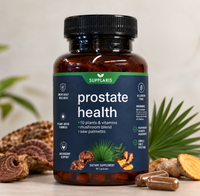
Supplaris Super Prostate Health includes stinging nettle root extract within its urinary-support botanical blend.
The formula also contains saw palmetto fruit extract and plant sterols, alongside mushroom extracts, antioxidant ingredients, and essential nutrients.
We encourage customers to understand both the scientific interest in these ingredients and the limits of current clinical evidence.
Frequently Asked Questions
Is nettle root the same as nettle leaf?
No. They come from the same plant but contain different concentrations of various compounds and are used in different preparations.
Can nettle root treat an enlarged prostate?
It has been investigated in this context, but it is not an established replacement for prescribed BPH treatment.
Is nettle root suitable for everyone?
Not necessarily. Botanical extracts may cause adverse effects or interact with medications. People with medical conditions should consult a healthcare professional before use.
Explore Super Prostate Health
Learn more about the botanical blend featured in Supplaris Super Prostate Health.
Scientific References
- European Medicines Agency. Herbal monographs and assessment reports on Urtica dioica / Urtica urens radix. https://www.ema.europa.eu/
- National Institute of Diabetes and Digestive and Kidney Diseases. Benign Prostatic Hyperplasia (BPH). https://www.niddk.nih.gov/
health-information/urologic- diseases/prostate-problems/ benign-prostatic-hyperplasia - World Health Organization. WHO Monographs on Selected Medicinal Plants. Relevant monographs on herbal preparations and traditional use.
Disclaimer: Educational information only. Dietary supplements are not intended to diagnose, treat, cure, or prevent disease.
These statements have not been evaluated by the Food and Drug Administration. This content is for general information only and is not intended to diagnose, treat, cure, or prevent any disease. Talk to your healthcare provider before starting any supplement.